Tree removal is frequently perceived as an uncomplicated task; however, it ranks among the most perilous jobs a homeowner may encounter. A solitary miscalculation can result in serious injury, damage to property, or even death. This guide will provide you with comprehensive information regarding safe tree removal, covering the risks involved and advising on when to engage a professional.

1. The Dangers of DIY Tree Removal

While it may be tempting to cut costs, attempting to remove a large or intricate tree by yourself poses significant risks. The most prevalent dangers include:

  • Severe Injury: There is a genuine risk of falling from a ladder, being hit by a falling branch, or suffering an injury from a chainsaw.
  • Damage to Property: An uncontrolled tree fall can result in damage to your home, fence, vehicle, or even a neighbor’s property, leading to expensive repairs.
  • Hazards Related to Power Lines: If a tree falls onto a power line, it can result in electrocution, fire hazards, or extensive power outages.
  • Concealed Hazards: The tree may be hollow, decayed, or intertwined with other branches in ways that are not apparent from the ground, which can lead to unpredictable falls.

2. When to Call a Professional Tree Service

For any tree removal, particularly under the following circumstances, engaging a professional is not merely advisable—it is essential.

  • Large or Mature Trees: Any tree exceeding the height of a two-story building necessitates expert rigging and cutting methods to manage its fall safely.
  • Proximity to Structures: When a tree is located close to your residence, garage, fence, or other buildings, the potential for property damage is too significant to handle independently.
  • Trees Near Power Lines: This task demands specialized training and equipment. Never attempt to remove a tree that is in close proximity to a power line.
  • Diseased or Damaged Trees: A tree that is afflicted with rot or disease lacks structural integrity and may split or collapse unexpectedly, rendering it highly unpredictable.
  • Storm-Damaged Trees: Such trees may have weakened root systems or branches that are under considerable tension, presenting a serious risk.

3. The Professional's Process: What to Expect

A professional tree service does not merely cut down a tree. They adhere to a rigorous process to guarantee that the task is performed safely and effectively.

  • Initial Assessment: A specialist will assess the tree’s condition, dimensions, and position. They will also recognize potential dangers such as power lines, adjacent structures, and other trees.
  • Developing a Safety Plan: Following the assessment, the arborist will ascertain the safest method for tree removal, which may entail felling the entire tree in one go or employing rigging to meticulously lower it in sections.
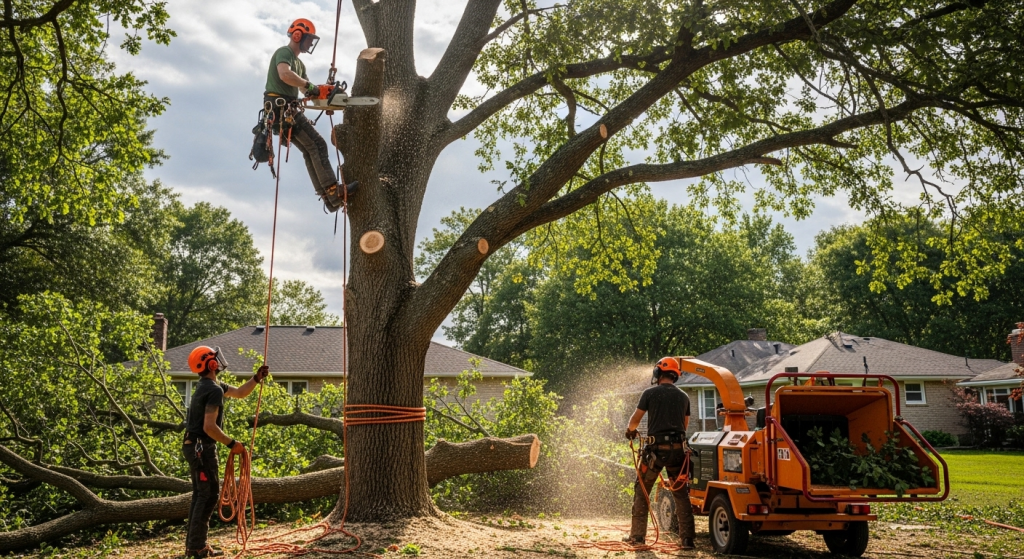
  • The Removal Process: Utilizing specialized tools such as ropes, harnesses, cranes, and chainsaws, the arborist will meticulously implement the plan, typically commencing from the top of the tree and progressing downward.
  • Cleanup and Debris Removal: Once the tree has been removed, the professionals will cut it into manageable sections, chip the branches, and dispose of all debris, ensuring your yard is left tidy.

4. What to Look for in a Tree Removal Company

Selecting the appropriate company is the most crucial choice you can make. Here are the factors to consider:

  • Licensing and Insurance: A trustworthy company will possess the necessary licenses to operate in your region and will have both liability and worker’s compensation insurance. This safeguards you from financial liability in the event of an accident occurring on your premises.
  • Certifications: Seek a company that employs an ISA (International Society of Arboriculture) Certified Arborist. This certification signifies a high degree of proficiency in tree care and removal.
  • Professional Equipment: A competent team will utilize well-maintained, specialized tools to carry out the task safely.
  • References and Reviews: Request references or examine online reviews to understand what previous clients have said regarding their work and professionalism.
  • Written Estimates: Always obtain a comprehensive, written estimate that details the scope of work, timeline, and total cost prior to the commencement of any work.

Conclusion

Although the concept of a DIY project may seem attractive, the hazards linked to tree removal are not worth the potential consequences. The definitive guide to safe tree removal emphasizes recognizing the risks and entrusting the task to professionals. By selecting a qualified, insured, and experienced expert, you safeguard your property and—most crucially—your own well-being.

Ready to Care for Your Trees?

Contact us today for a free assessment and estimate. Our certified arborists will provide expert recommendations for your property.