
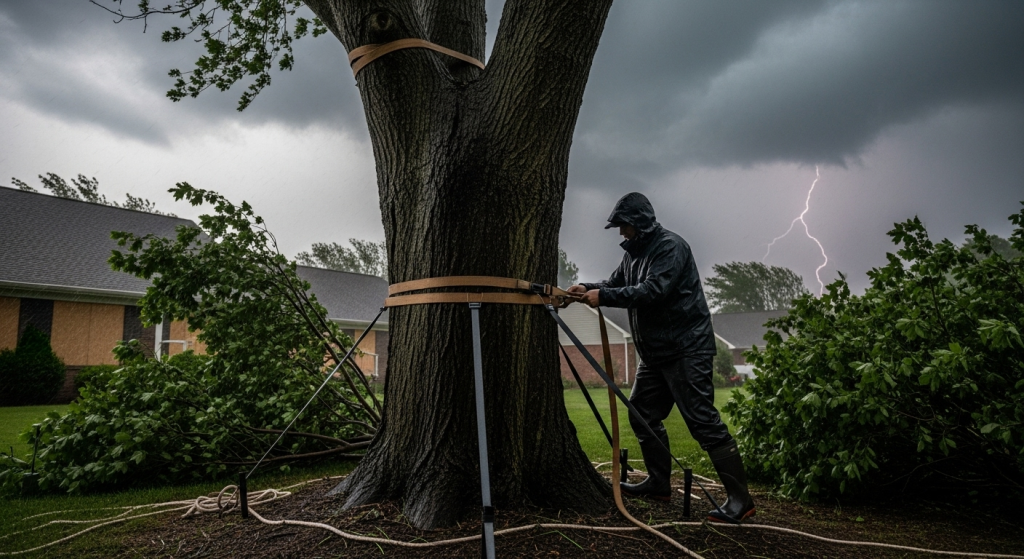
The catastrophic effects of a major storm are frequently exacerbated by one key element: the state of the trees in your yard. Although we cannot influence the weather, we can greatly reduce the likelihood of property damage and personal harm by making certain our trees are robust. Preventive tree maintenance serves as the most efficient safeguard against storm-related damage. This thorough guide provides an overview of the vital measures for fortifying your landscape against storms and delineates the essential safety procedures to adhere to during an emergency, thereby ensuring the utmost protection for your home and family.
Section 1: Pre-Storm Preparation (The Best Defense)
The most effective method to endure a storm is to prepare adequately for it. Preventive care aims to address the vulnerabilities that storms can exploit, thus guaranteeing that your trees possess the structural integrity necessary to withstand strong winds and heavy rainfall.
- Paragraph Detail: Prior to the onset of severe weather, the most essential action is to invest in professional preventive pruning. Dead, diseased, or broken branches, commonly known as “widowmakers,” are the first to break under wind pressure and are the leading cause of damage to roofs, vehicles, and fences. Additionally, for trees that are of high value or structurally at risk—such as those with multiple main stems or splits—professional arborists can implement support systems like cabling and bracing to enhance strength and minimize the risk of catastrophic failure. Lastly, maintaining the health of the tree’s anchorage through appropriate watering and soil management is crucial, as the health of the roots determines stability.
- Key Action Points (Point Form):
- Schedule Preventive Pruning: Eliminate dead, diseased, or poorly attached branches before the storm season to remove high-risk failure points.
- Install Cabling/Bracing: Employ professional support systems to stabilize mature, structurally compromised, or high-value trees.
- Maintain Root Health: Ensure proper soil management, including adequate mulching and drainage, as robust roots are the cornerstone of storm resilience.
Section 2: When Disaster Strikes (Immediate Safety Protocol)
After a storm has subsided, your prompt actions are essential for ensuring safety and protecting your property. The foremost concern is always personal safety, since fallen trees frequently hide dangerous hazards.
- Paragraph Detail: The foremost rule to adhere to is the 10-Foot Rule: always treat all downed power lines as if they are live, regardless of their appearance. Should a tree or branch be in proximity to an electrical line, it is imperative to contact the power company and emergency services without delay; do not enter the vicinity yourself, and absolutely refrain from touching the tree. After the area has been deemed safe, perform a thorough damage assessment from a safe distance, specifically observing for trees that are leaning dangerously or for large branches that are partially broken and ‘hanging.’ Lastly, prior to commencing any cleanup, ensure to take clear and detailed photographs and documentation of the damage, as this will be crucial when submitting an insurance claim.
- Key Action Points (Bullet Points):
- DO NOT Approach Downed Lines: If a tree is in contact with or close to a power line, promptly notify the power company and maintain a safe distance of at least 10 feet.
- Assess Damage Safely: Before entering the area, observe for unstable trees, noticeable splits, or “widowmakers” from a secure distance.
- Document Everything: Capture high-resolution photographs of all damaged property as well as the fallen trees and branches for insurance claims prior to commencing any cleanup.
Section 3: Understanding Emergency Tree Service
Emergency tree service represents a specialized area that is separate from standard tree removal, requiring prompt action and professional skill to safeguard your property from additional damage.
- Paragraph Detail: Addressing a significant tree that has collapsed onto a residence, vehicle, or other structure is a perilous task that necessitates more than merely a chainsaw. In contrast to scheduled removal, emergency services require specialized equipment, including large cranes and advanced rigging techniques, to safely lift and sever sections of the tree without inflicting additional damage to the affected structure. This type of operation carries an exceptionally high level of risk and liability. Consequently, it is crucial to engage a professional, fully insured arborist who offers 24/7 emergency response. Utilizing an insured service safeguards the homeowner from liability associated with injuries or further property damage during the intricate cleanup process.
- Key Action Points (Bullet Points):
- Specialized Equipment: The removal of trees in emergencies necessitates the use of cranes, heavy rigging, and personnel with specialized training to safely lift trees from structures.
- Liability Protection: It is essential to engage a professional service that is fully insured to safeguard yourself against liability for injuries or additional property damage during the hazardous cleanup process.
- 24/7 Availability: Look for companies that offer emergency response services at all hours to promptly address risks following a severe weather incident.
Conclusion: Prioritize Prevention and Safety
Storm damage can be a source of stress; however, its effects can be greatly mitigated through proper preparation and professional assistance. By investing in preventive measures, you not only strengthen your trees but also gain peace of mind. In the unfortunate event that damage occurs, prioritizing safety and promptly contacting a professional for evaluation and removal are crucial steps that reduce risk and enhance recovery.
Call to Action: Do not wait for the next storm to evaluate your trees. Reach out to us today for a Pre-Storm Risk Assessment and a quote for preventative pruning to ensure your landscape is prepared for whatever challenges nature may present.