
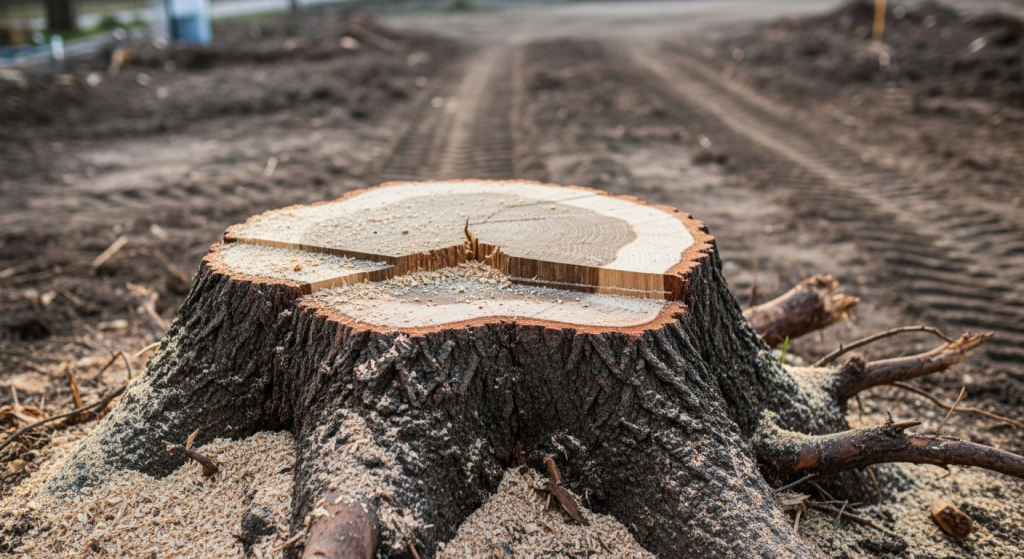
The task is not completely accomplished after a tree has been safely felled. A persistent reminder remains: the tree stump. Although some homeowners may consider leaving it, ignoring a stump can result in numerous future issues for your property and landscape.
Why Remove a Stump?
Safety Hazard: Stumps are tripping hazards, especially if they are covered by overgrown grass or located in high-traffic areas. They pose a significant risk to family members and visitors.
Pest Infestation: As the wood decays, it becomes an ideal breeding ground for termites, ants, beetles, and other unwanted pests that can eventually migrate from the stump to the rest of your home or garden.
Aesthetics & Property Value: A rotting, unsightly stump significantly detracts from the beauty and curb appeal of your yard, impacting your property’s overall value.
Landscape Obstruction: Stumps prevent you from utilizing that valuable space for new planting, landscaping features, or even future construction.
Grinding vs. Removal: What’s the Difference?
When addressing a remaining stump, you essentially have two professional options. Understanding the distinction will assist you in selecting the appropriate service for your requirements.
1. Stump Grinding (The Most Common Choice)
Stump grinding is the most popular, cost-effective, and least invasive method.
Process: A heavy-duty machine uses a rotating cutting wheel equipped with carbide teeth to methodically grind the wood down into small chips. Professionals typically grind the stump 4 to 12 inches below the surface, depending on your plans for the area.
Result: The stump itself is eliminated, and the area is flat and usable. The majority of the root system remains underground to decompose naturally, but the visible portion and the hazard are gone.
Best For: Homeowners who want to plant grass, a garden bed, or a new small tree in the location without extensive site restoration.
2. Full Stump Removal (The Complete Solution)
Full removal is a more intensive process that ensures all of the material is gone.
Process: This involves digging out the main stump and using heavy equipment, like a backhoe, to pull the entire root ball and major lateral roots out of the ground.
Result: It leaves a large, unfilled hole and requires significantly more effort to transport the massive stump waste and then fill, compact, and repair the disturbed ground afterward.
Best For: Situations where you plan to build a structure, patio, or foundation exactly where the tree stood, as even deep roots can interfere with construction.
Factors That Impact the Cost and Time
When requesting a quote for professional stump service, several factors influence the final price and duration:
Stump Size and Wood Type: The wider and taller the stump, the more time and effort is required. Hardwoods (like oak) are much denser than softwoods (like pine) and take significantly longer to grind.
Accessibility: If the stump is in an open yard, the crew can use large, efficient grinders. If it’s located in a fenced-in area, near a septic system, or on a steep slope, smaller, specialized equipment must be used, increasing the labor time.
Proximity to Obstacles: Stumps close to concrete, pavement, or utility lines require the crew to work more slowly and cautiously to avoid damage to infrastructure or equipment.
What to Do with the Leftover Material
The end result of stump grinding is a large pile of fresh wood chips mixed with soil. You have several options for this material:
Backfill the Hole: The most immediate use is to mix the chips with topsoil and use the blend to fill the depression left by the grinding process. This keeps the material on-site and returns the area to grade.
Use as Mulch: If you have an excess, the wood chips can be used as landscape mulch around other trees or garden beds, providing a natural, beneficial ground cover.
Removal: If you don’t need the material, your professional tree service can haul away the excess chips and debris as part of the service package, leaving you with a completely cleared space.
To ensure the job is done safely and efficiently, always rely on an insured and experienced tree service provider who has the right equipment for the task.
Conclusion
Although the sensation of having a dangerous or undesirable tree taken down brings significant relief, the task is not genuinely finished until the stump is eliminated. Leaving the stump in place invites pests, poses potential dangers, and creates visual deterioration that detracts from your property’s overall attractiveness. Whether you choose the effectiveness of stump grinding to rejuvenate your lawn or the thoroughness of complete removal for future building projects, it is crucial to address the stump for a safe, aesthetically pleasing, and fully functional yard. Do not jeopardize your investment; reach out to a professional, insured tree service today to finalize the task and reclaim your outdoor area.